Loading...
Serving Palm Beach Gardens, FL and surrounding areas. (728) 529-5144
Florida sun and daily rain destroy unsealed concrete fast. We clean, prep, and seal your driveway, pool deck, or patio with products built for South Florida's climate - so your surfaces stay protected and looking right.
Concrete sealing in Palm Beach Gardens puts a protective layer over your driveway, pool deck, or patio that blocks moisture, oil, and stains from soaking in - most residential jobs take one day from cleaning to curing, with surfaces ready for use the next morning.
In Palm Beach Gardens, sealing is not optional maintenance - it is what keeps Florida's UV intensity, afternoon rain, and pool chemistry from breaking down your concrete year after year. An unsealed or worn surface absorbs everything that lands on it, and once moisture and algae get a foothold, the surface degrades faster than most homeowners expect. Whether it is your pool deck, driveway, or lanai, sealed concrete is cleaner, safer underfoot, and far easier to maintain.
Sealing works best when the surface underneath is sound. If your concrete has cracks, rough patches, or old coatings that need to come off first, pairing this service with concrete grinding and surface preparation ensures the sealer bonds properly and holds up the way it should.
Pour a small cup of water on your driveway or patio. If it soaks in within a minute or two rather than sitting on top in a bead, your sealer has worn away. This is the clearest sign your concrete is absorbing whatever lands on it - rain, oil, pool chemicals, and more.
In Palm Beach Gardens' warm, humid climate, algae and mold grow quickly on concrete that has lost its protective coating. If you are seeing green patches near the pool or dark streaks on your patio that keep coming back no matter how often you rinse them, the surface is porous enough to be harboring growth.
Concrete that was once a consistent gray or had a slight sheen can start to look washed out and uneven as the sealer breaks down under Florida's UV exposure. This is not just cosmetic - it means the surface is fully exposed to moisture and stains. Resealing restores both the appearance and the protection.
Small surface cracks or chips in the top layer of concrete are a sign that moisture has been getting in and working its way out during temperature changes. Palm Beach Gardens' heat and daily rain accelerate this process. Catching it early with a sealer - after any needed repairs - prevents the damage from spreading deeper.
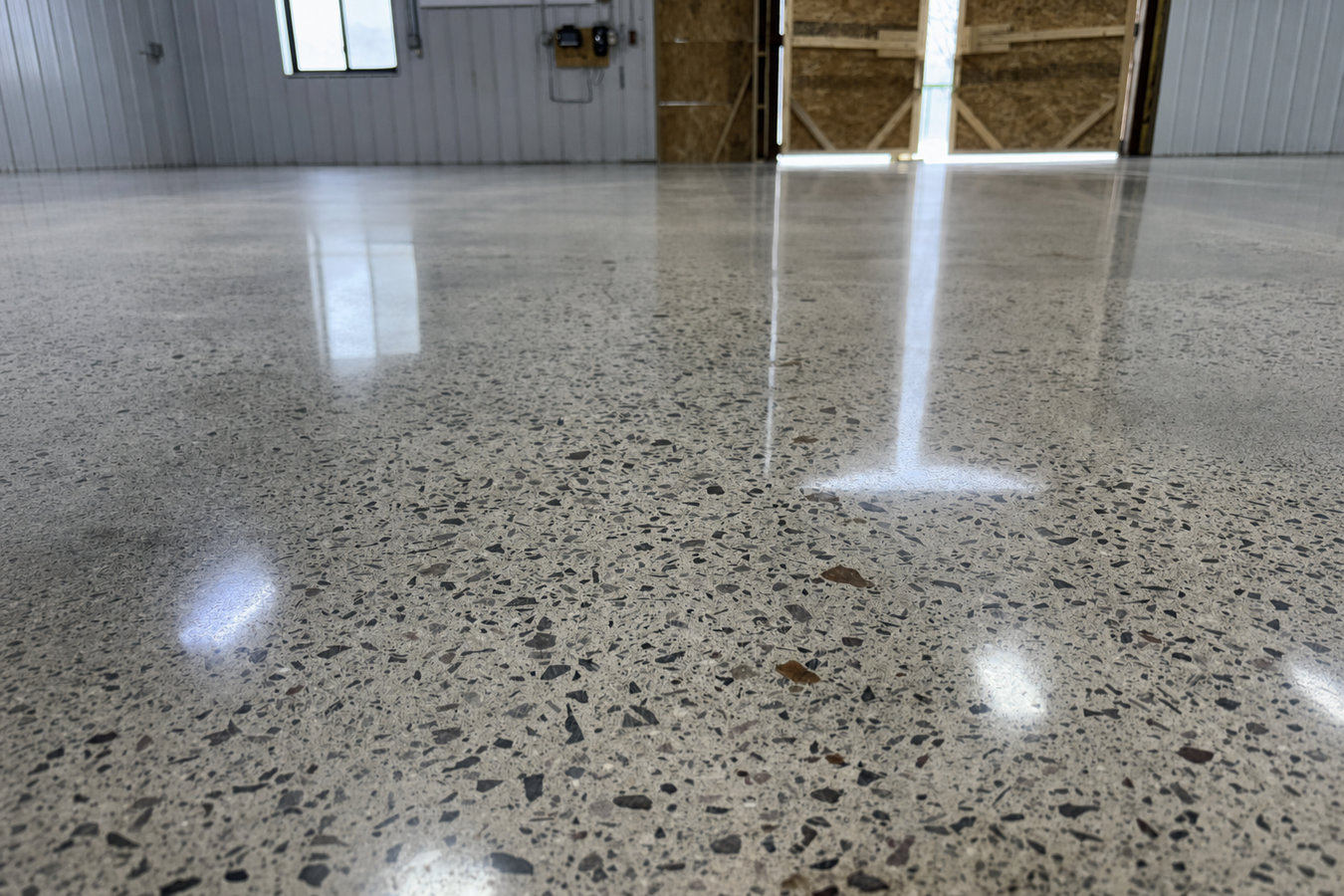
We offer penetrating sealers and topical sealers depending on what your surface needs. Penetrating sealers soak into the concrete and protect it from the inside without changing how it looks - the surface stays the same color and texture but sheds water and resists stains. These work well for driveways and patios where you want invisible protection and a natural appearance. Topical sealers sit on the surface and add a sheen that ranges from a subtle satin finish to a high-gloss look, and they are a popular choice for pool decks where a clean, finished appearance matters.
For surfaces that have significant wear or damage, we often recommend combining sealing with concrete resurfacing and overlays to address the underlying surface before the sealer goes down. We can also add a non-slip texture to pool deck sealers - an important detail in Palm Beach Gardens where wet, smooth concrete becomes a safety hazard during the afternoon rain season. Every sealing job starts with a thorough cleaning and surface assessment, and we will tell you honestly if something needs to be repaired before we seal.
Best for driveways and patios where you want maximum protection with a natural look that does not change the surface appearance.
Suits pool decks and patios where a finished sheen, consistent color, and easy-to-clean surface are the priority.
Ideal for families with children or older adults where wet-surface traction around the pool is a real safety concern.
For homeowners in Palm Beach Gardens communities like PGA National or BallenIsles where surface appearance is subject to HOA review.
Palm Beach Gardens sits in one of the sunniest counties in Florida, and constant UV exposure breaks down standard sealers much faster than in cooler or cloudier climates. A sealer that might last four or five years in a northern state may need to be reapplied every two to three years here. On top of that, Palm Beach County's rainy season brings daily afternoon thunderstorms from June through September, and algae and mold take hold quickly on concrete that has lost its protective layer. Pool decks here need attention more often than most homeowners expect - not because the work was done poorly, but because South Florida is simply harder on concrete surfaces than most of the country.
HOA rules add another layer of consideration for many Palm Beach Gardens homeowners. Communities like PGA National and BallenIsles may have guidelines on approved finishes and colors for driveways and pool decks. We have worked in Palm Beach Gardens neighborhoods long enough to know the common restrictions, and we will flag any potential issues before you commit to a specific sealer finish. Homeowners in Boynton Beach, FL and Boca Raton, FL face the same HOA and climate conditions, and we serve those areas as well.
We will ask a few quick questions over the phone - what surface needs sealing, roughly how large it is, and whether there are any visible cracks or stains. We reply within one business day and schedule a free on-site visit at no obligation.
We walk the surface and look for cracks, old sealer that needs to be stripped, staining, or any signs of movement in the slab. We will be honest if we find something that needs to be fixed before sealing, and we give you a written quote broken out so you can compare it fairly.
The crew pressure-washes the concrete and removes any mold, algae, or oil stains before the sealer goes down. If old sealer is peeling or bubbling, we strip it off first. Most South Florida crews start early in the morning so the surface has time to dry before afternoon humidity climbs.
The sealer goes on with a roller or sprayer in one or two coats. Stay off the surface for at least 24 hours - sometimes 48 depending on the product used. Your contractor will give you a clear timeline before leaving and tell you exactly when the surface is ready to use.
We clean, prep, and seal using UV-rated products built for South Florida - with a written quote and no pressure.
Standard sealers sold at big-box stores are not rated for Palm Beach Gardens' UV intensity. We use products specifically formulated for high-UV climates, which is why our sealing jobs hold up for two to three years here rather than fading within a season.
A sealer applied over dirty, moldy, or wet concrete will fail within months. Our prep process always includes pressure washing, algae treatment, and surface drying - in that order - before any product goes down. We do not seal over problems.
Sealing alone will not fix a slab that is cracking from below or has structural issues. We tell you that upfront during the assessment rather than just sealing over a problem and sending you an invoice. If repairs are needed first, we include them in the scope.
Palm Beach County's rainy season brings daily afternoon thunderstorms from June through September. We schedule sealing jobs for early mornings and monitor forecasts so your project does not get ruined by a surprise shower. That scheduling discipline is what separates good work from a redo job.
The American Concrete Institute guides the preparation and application standards we follow on every sealing job. Combined with first-hand knowledge of how Palm Beach Gardens' soil, sun, and rain behave, that foundation is why our work holds up when a standard sealing job would not.
When sealing alone is not enough - resurface cracked or worn concrete with a fresh overlay before the new sealer goes down.
Learn MoreStrip old sealers, remove stains, and open the concrete surface so the new sealer bonds properly the first time.
Learn MoreDry-season booking slots in Palm Beach Gardens fill up fast. Call (728) 529-5144 or request a free on-site estimate today and get your surfaces protected before the next rainy season begins.